Before You Book a Tour, Open Your Closet: The Stuff Audit That Predicts Studio Happiness
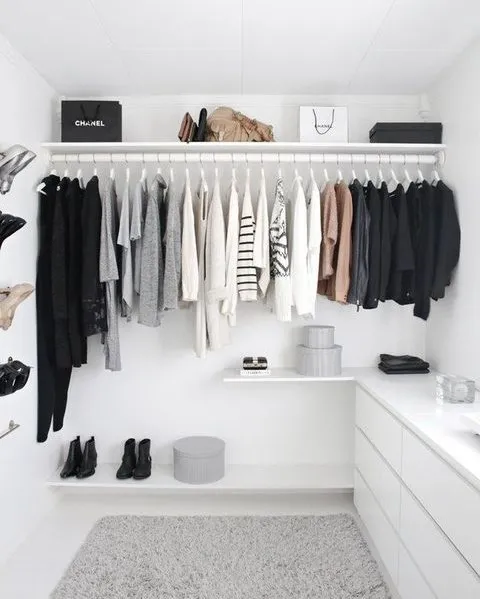
Photo: organized minimalist closet small apartment wardrobe, via i.shelterness.com
We'll let you in on a leasing-office secret: the folks who thrive in a studio aren't the ones with the best taste or the biggest budget. They're the ones who arrived honest about their stuff.
You can tour a floor plan, pace off the kitchen, stand in the corner where the bed goes. But none of that tells you what life at 400 square feet will actually feel like. Your closet does. Because a studio doesn't shrink to fit your possessions — your possessions expand to fill a studio. Run the audit first, and you'll know which kind of studio resident you're about to become.
The Thesis: Closets Don't Lie
Everyone claims they're "pretty minimal." Almost no one is. The average American household holds around 300,000 items, and a startling share of them live in one honest little room: the closet. It's where the kayak paddle goes to die, where the bridesmaid dress from 2019 waits for an occasion that will never come, where the winter boots you forgot you owned hibernate year-round.
In a two-bedroom, that closet is a junk drawer. In a studio, it's prime real estate competing with your bed, your desk, and your dignity. So before you fall in love with a floor plan, fall out of love with some of your stuff.
The Ruthless Audit: Four Passes, One Weekend
Block out a Saturday. Pull everything out — yes, everything — and sort into four piles: keep, seasonal, maybe, gone. Then apply these tests.
Pass One: The Wear Test
Haven't touched it in twelve months? Gone. No exceptions for "but it might fit someday" or "it was expensive." The cost is sunk either way; the only question is whether it eats your future square footage. A good rule of thumb: if you can't remember the last time you wore it without an occasion attached, it's decorating your closet, not dressing you.
Pass Two: The Seasonal Squeeze
Here's where studio life gets real. You won't have an attic, a basement, or a spare room. Your winter parka, your holiday decorations, your tax paperwork — it all lives with you, year-round. Sort seasonal items into a single bin per season, max. If your off-season gear won't fit in two under-bed boxes, you don't have a storage problem. You have a letting-go problem.
Pass Three: The Hobby Interrogation
This is the one that breaks people. Ski equipment. A sewing machine used twice. The guitar from the phase two years ago. Every hobby has a footprint, and in a studio, hobbies share a room with your sleep. Ask the brutal question: have I actually done this in the last six months? Not "do I plan to" — plan is free. Done is what counts. If it's real, keep it and get clever with vertical storage. If it's aspirational, sell it and let someone else chase the dream.
Pass Four: The Duplicate Sweep
Two blenders. Five throw blankets. Eleven mugs for one face. Dupes feel harmless one at a time, but in a studio they're the quiet killers. Keep the best of each, donate the rest, and enjoy the weird lightness that follows.
The Stuff-to-Square-Footage Litmus Test
Ready for the math? Here's our unofficial metric, honed from watching hundreds of residents settle in:
Count your keep pile. Divide by your target square footage.
- Under 1 item per square foot? You're studio-ready. Book the tour.
- 1 to 2 items per square foot? Workable, but commit to the audit again in six months.
- Over 2 per square foot? Be honest with yourself: you're not looking for a studio, you're looking for a bigger apartment with a studio budget. That's okay! Know it now, not after move-in.
The point isn't minimalism as an aesthetic. It's margin. Studios feel great when there's breathing room, and breathing room is just the absence of stuff you don't need.
What You'll Actually Gain
Here's the part nobody warns you about: the audit pays you. A weekend of ruthless sorting typically turns into a few hundred dollars of resale, a donation receipt at tax time, and a move that costs half as much because you're hauling less. Residents who downsize before leasing consistently report the same thing — the studio felt bigger than expected. Not because 400 square feet grew, but because they shrank to fit it.
And there's a lifestyle dividend too. Less stuff means faster cleaning, easier mornings, and a home where every item earned its spot. When your commute is a quick hop on I-65 and your evenings are your own, the last thing you want is a closet arguing with you.
The Bottom Line
A studio will magnify whatever you bring into it. Bring intention, and it feels like a clever, efficient launchpad minutes from everything. Bring clutter, and it feels like a storage unit with a bed in it.
So do the audit first. Open the closet, tell the truth, and then come walk our floor plans. The ones who show up with one bin of winter gear and zero regrets? Those are our happiest residents. We'd love to count you among them.