Gear Creep Is Real: How to Keep Your Audio Setup From Eating Your Studio Alive
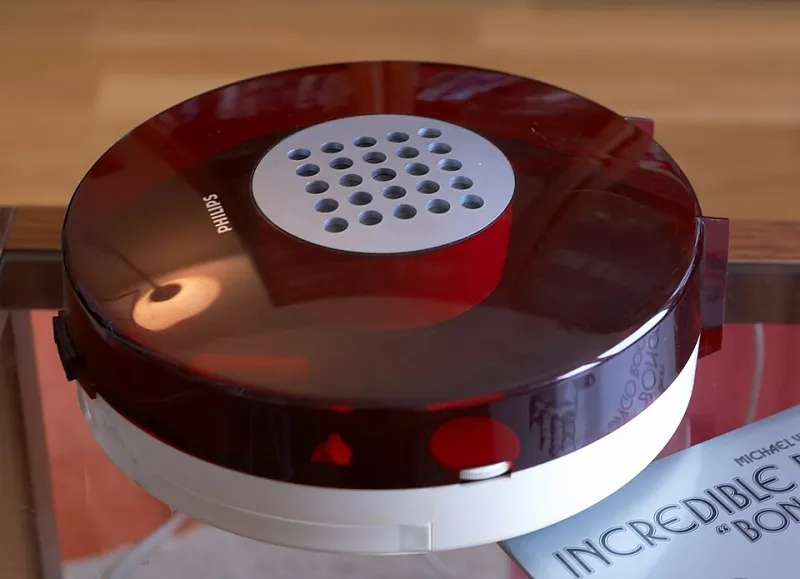
Photo: My Past from Norway, CC BY 2.0, via Wikimedia Commons
Every studio dweller has a moment. Yours might be the night you realized your record collection had quietly annexed the top of your dresser, your second pair of headphones was living in a coffee mug, and a Bluetooth speaker was perched — somehow — on top of the toilet tank.
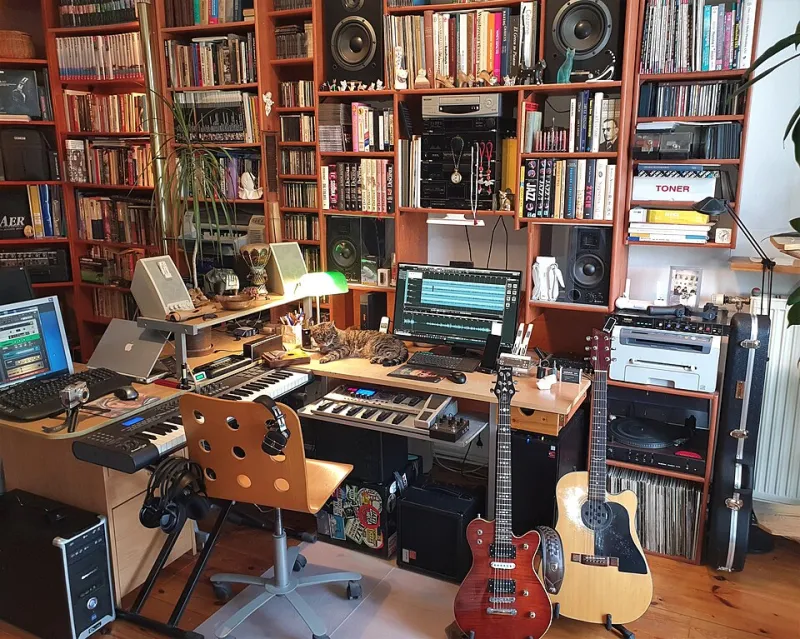
Audio gear creeps. It doesn't announce itself. One set of bookshelf speakers becomes a turntable, which becomes a headphone amp, which becomes a drawer of dongles that makes no sense to anyone but you. In a house, this is a hobby. In a studio near I-65, where the kitchen counter is also your desk and your desk is also your nightstand, it's a land-use problem.
The good news: you don't have to give up good sound. You just need a system.
Why Audio Gear Is the Worst Kind of Clutter
Clothes fold. Books stack. Audio equipment does neither. Speakers want breathing room, cables tangle into bird's nests, and vinyl records are heavy, wide, and oddly shaped — they fit almost nowhere that wasn't purpose-built for them.
There's also the psychological factor. Music gear carries identity. That's why it's harder to declutter than a stack of junk mail. You're not deciding whether to keep an object; you're deciding who you are. A studio doesn't have room for an identity crisis, so let's shortcut it.
The Three-Tier Listening System
Match your setup to your honest listening life, not your aspirational one. Be brutal here — if you've used the turntable twice since March, it's decor, not equipment.
Tier 1: The Minimalist (under 300 square feet or a true one-bag lifestyle). One quality Bluetooth speaker, roughly the size of a hardcover book. That's it. It moves from the kitchen counter to the nightstand to the windowsill depending on the day. Storage footprint: one shelf, one charging cable. If your social life happens at the coffee shop down the street and your commute is a highway playlist anyway, this tier is not a compromise — it's a flex.
Tier 2: The Dedicated Listener (the sweet spot for most studio renters). A pair of powered bookshelf speakers on your media console or floating shelves, plus one pair of wired or wireless headphones. Storage footprint: one console, one drawer for accessories. This tier sounds dramatically better than Tier 1 and still fits a studio without swallowing it. Powered speakers matter — they eliminate a separate amp, which in studio terms is a whole piece of real estate.
Tier 3: The Enthusiast. Turntable, speakers, headphones, DAC, the works. It's possible in a studio, but only with discipline. Every piece must earn its footprint — a standard we've preached before, and nowhere does it matter more than with gear that hums, heats up, and needs cable management.
Storage Moves That Actually Work
- Vertical vinyl. Records are 12.75 inches square. Cube storage units (the 13-inch kind sold everywhere from Target to IKEA) are essentially custom vinyl shelving in disguise. One two-cube unit holds around 100 records and doubles as a nightstand or speaker stand.
- The cable drawer. One drawer. One organizer tray. All cables, adapters, and remotes live there. If a cable doesn't fit in the drawer, you don't need the cable.
- Headphones get a hook. Wall hooks cost three dollars and keep your cans off the desk, the bed, and the floor. Mount one next to your console and one near the door for commutes.
- Speakers at ear height, always. Floating shelves or console placement isn't just about storage — proper placement means smaller speakers sound bigger, which lets you buy less speaker.
- Roll it, don't build it. If you're Tier 3, a slim rolling cart (the classic utility cart) can hold a turntable, records, and accessories, and it moves when you rearrange or deep-clean.
The One-In-One-Out Rule
Here's the part gear lovers will fight, and then quietly adopt. For every piece of audio equipment that comes in, one goes out — sold, gifted, or traded. New headphones? The old pair leaves. Upgraded speakers? List the old ones within the week, not "someday."
The rule works because audio gear holds resale value better than almost any other hobby. That used pair of speakers isn't clutter; it's cash toward the upgrade. Marketplace and local audio groups move used gear fast, and your future self — the one packing for your next apartment — will be grateful.
The Soundcheck
Once a season, run a quick audit. Pull out every piece of audio gear. Touch each one. If you can't remember the last time you used it, it goes in the outbox. Three items or fewer should leave most studios feeling lighter; ten means you've got a weekend project.
Your studio doesn't have to sound small just because it is. A tight, intentional setup — two good speakers, one pair of headphones, zero mystery cables — will outperform a sprawling mess every time. And when the whole room works as one listening space, honestly? That's the advantage of studio living. The music doesn't stay in one room, because there's only one room. Make it count.